The Escazu Agreement: A legal and community pillar for the peoples.
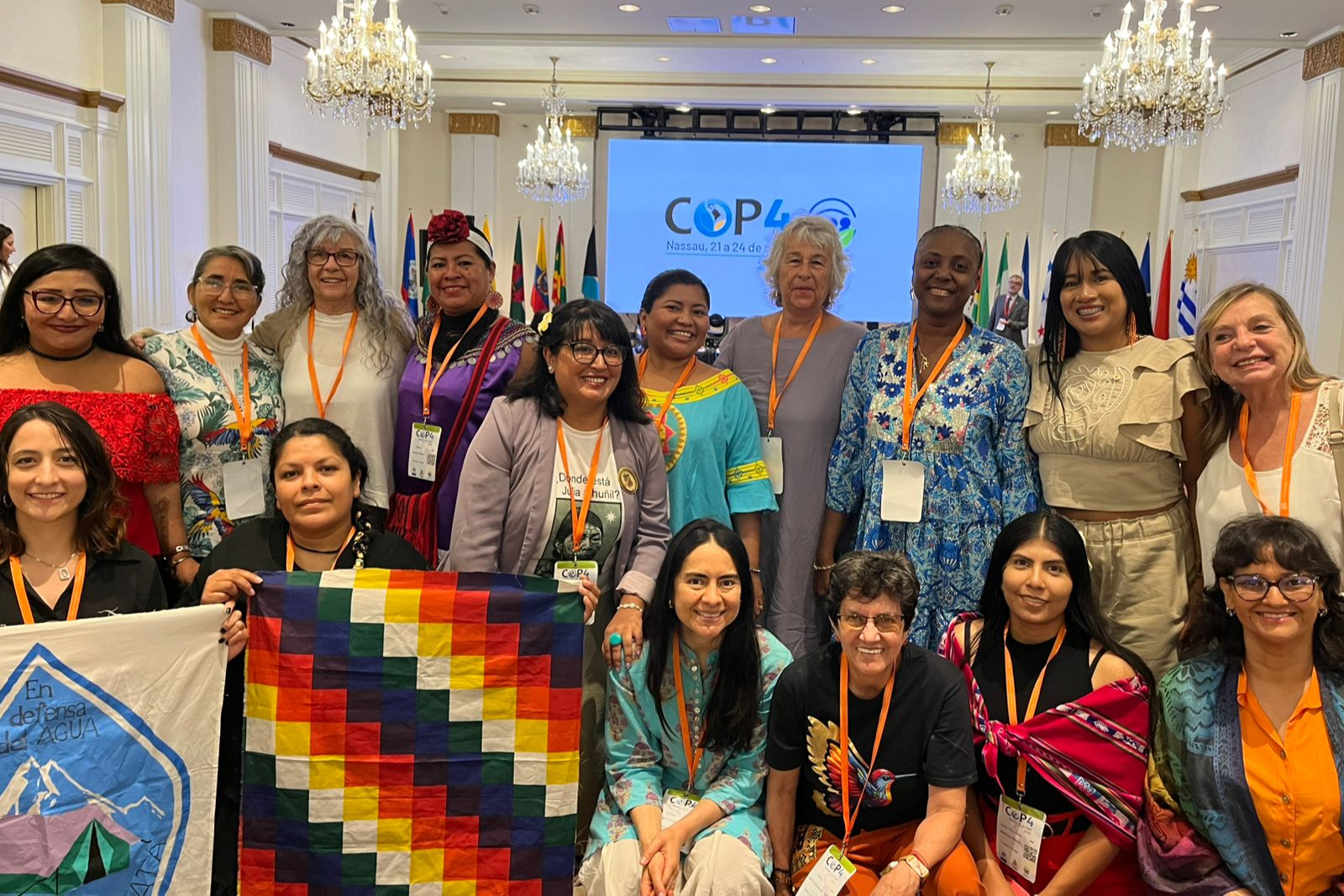
Collab: Bárbara Astudillo Delgado ("Protege Los Molles Foundation" Chile)
Johana Itati Brida ("Water Assemblies of Mendoza" Argentina).
In times when socioenvironmental challenges are intensifying and communities face growing challenges to protect their territories the Escazú Agreement has become much more than an international treaty. For many peoples organizations and defenders of nature Escazú is today a true legal and community pillar: a tool for protection a guide for action and a concrete hope to strengthen environmental democracy.
Its essence lies in simple yet transformative principles: access to information public participation in decision-making access to justice in environmental matters and the protection of those who defend human rights in environmental matters. These pillars ensure that communities are not mere spectators of the projects or policies that affect their territories but rather protagonists of the decisions that impact their present and future. In this way community coordination becomes a key response especially in contexts where states face the challenge of balancing economic interests with the effective guarantee of citizens rights.

Escazú is also sustained by guiding principles that orient its implementation and strengthen a new way of understanding the relationship between human rights democracy and environmental protection. Among them equality and nondiscrimination transparency accountability progressivity and nonregression good faith prevention precaution intergenerational equity and the permanent sovereignty of States over their natural resources stand out.
These principles recognize that the defense of common goods (such as water, wetlands forests, biodiversity and the ecosystems that sustain life) is deeply linked to the protection of human rights. Defending common goods is not solely an environmental action it is also the defense of the right to life health water a healthy environment democratic participation and the dignity of present and future communities.
In the current debate on development the agreement recalls that progress and state institutions are not exclusive but rather complementary within the democratic framework. In this equation citizen participation acquires vital importance especially when discussing decisions that directly affect the territory customs and common goods of populations consolidating itself as a key piece to strengthen democratic quality. That environmental defenders must expose themselves to a first line of vulnerability without institutions fully guaranteeing their safety is a matter of extreme gravity that requires urgent attention.

One of the greatest contributions of Escazú is that it recognizes that environmental challenges and threats against defenders know no borders. Therefore the agreement promotes regional cooperation and the building of collaborative networks among Latin American and Caribbean countries to exchange experiences strengthen institutional capacities, and advance common protection standards. This dimension is particularly relevant in a region that continues to record high rates of risk for those who defend land water ecosystems and human rights. Faced with this reality, cooperation among States, international organizations academia civil society organizations and communities is fundamental.
No country can face alone a problem that crosses borders and responds to increasingly complex economic social and environmental dynamics. Cross-border collaboration is not a luxury but a necessity for glaciers rivers oceans forests and species; that is ecosystems that are not limited by dividing lines just as environmental impacts are not.

In a turning point for humanity Escazú reminds us that the principle of progressivity is a minimum floor, and that environmental policies must be built from the constant improvement of existing regulations and not from regressions that weaken protection standards. The collaboration networks driven by Escazú also make it possible to highlight risk situations share good practices and strengthen solidarity among peoples. When an environmental defender is threatened in any corner of our region the challenge does not belong solely to their community or country it calls upon all of Latin America and the Caribbean.
Wherever an informed and organized community exists Escazú ceases to be a document to become a daily practice of defense participation and care #ForABetterWorld.
The ultimate goal is not only the resilience of communities but allowing them to chart the path toward sustainable just and respectful development with their environment.

Comments